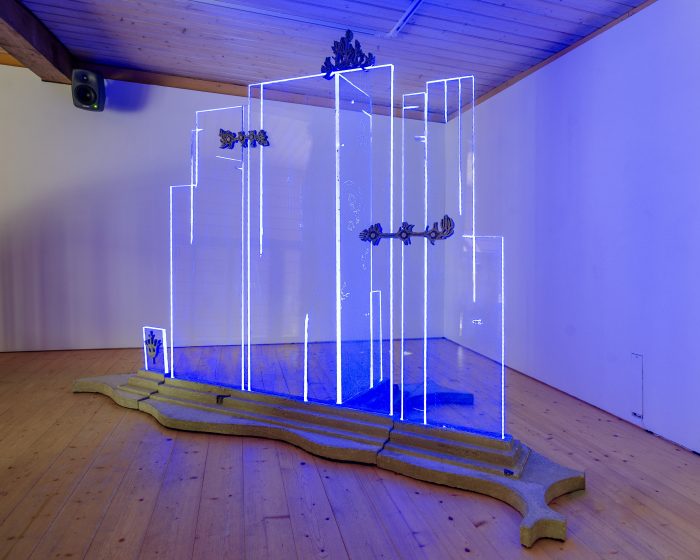
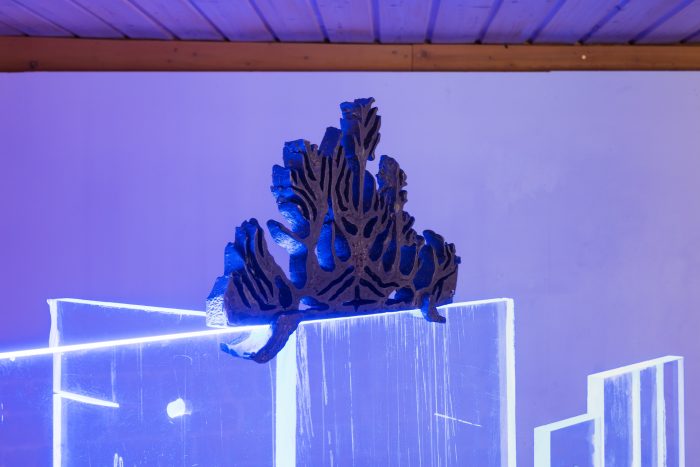
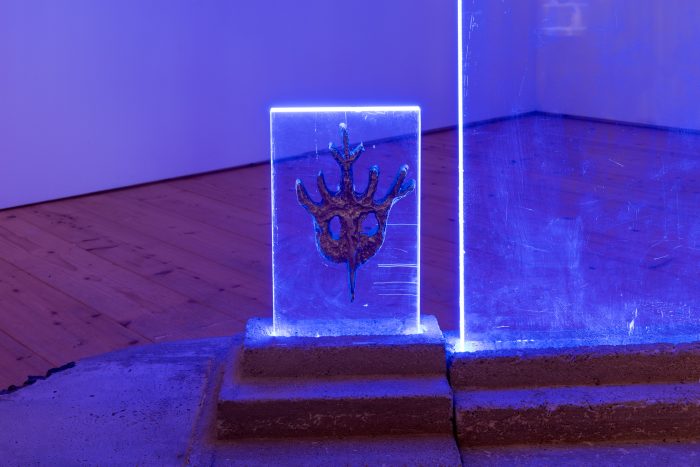
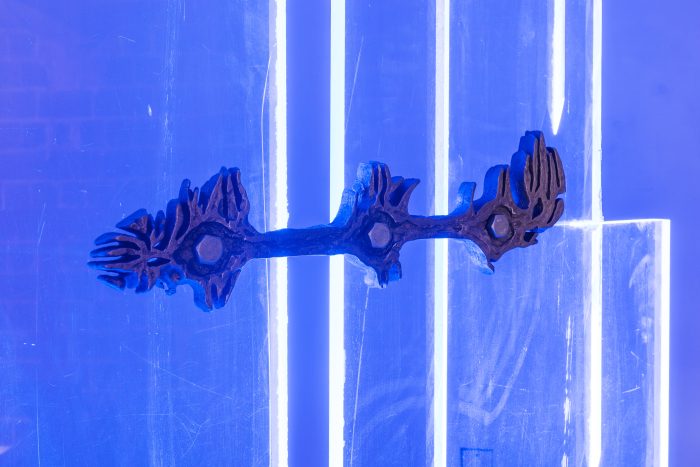
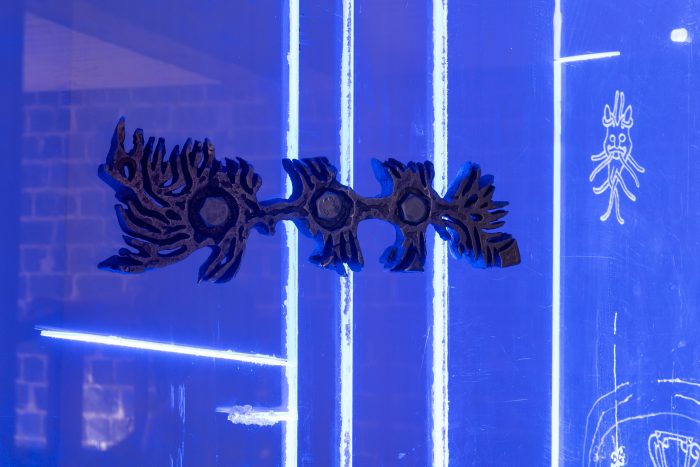
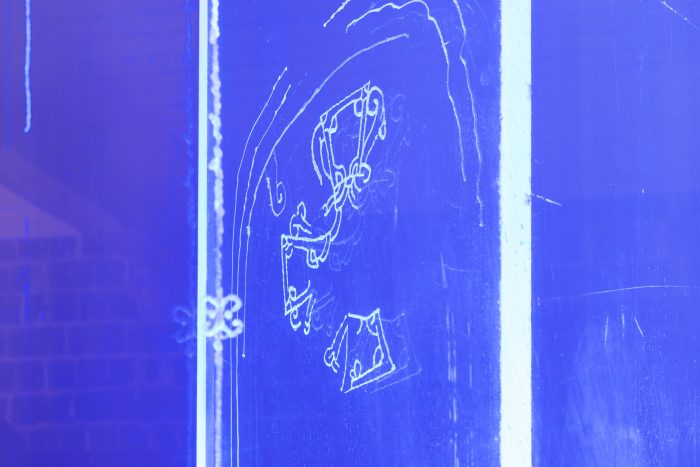
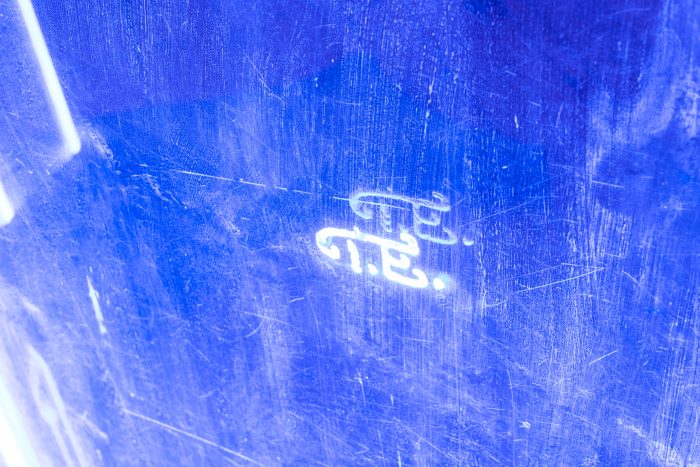
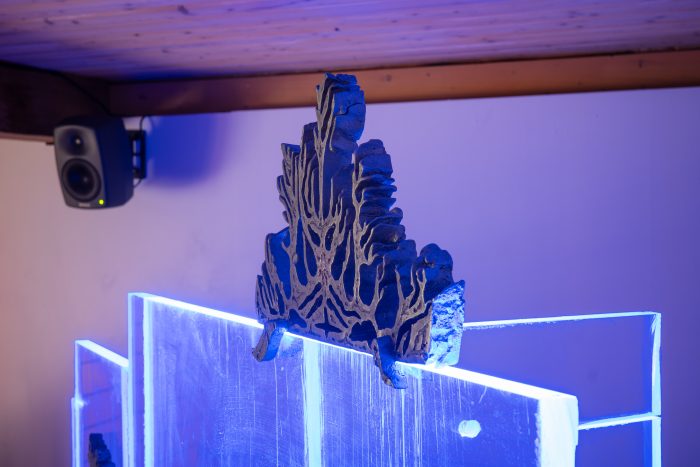
MONUMENT FOR A WASTELAND, 2025, Recycled plexiglass, concrete, cast aluminum, slag bricks, led-lights
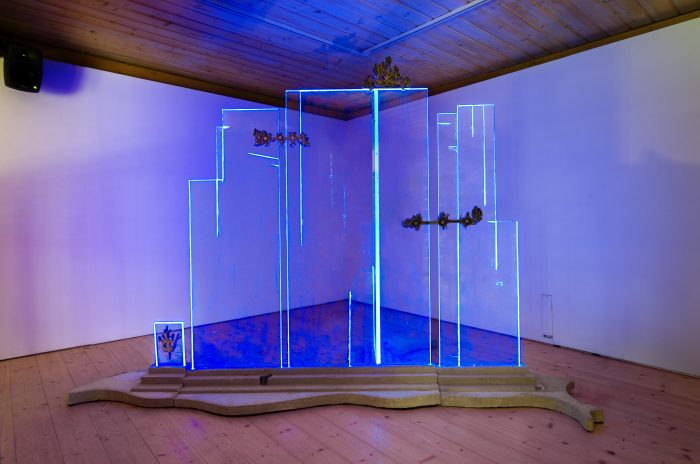
Monument for a Wasteland is a light sculpture produced for the exhibition in VS-gallery by Tatu Engeström.
The sculpture is made of recycled materials — of concrete, plexiglass and cast aluminium. These materials are some of the most common in modern architecture aesthetics. The construction waste that is being produced in the building industry as well often ends up drifting around in the environment as scrap. Wandering around the city, finding and reusing these materials is a key part of the work.
A small piece of local history is also integrated into the sculpture. Bits of slag bricks from the old Fiskars iron factory are imbedded into the concrete. This waste material is a byproduct of metal melting and was also used as a building material for the gallery building.
The starting point of Monument for a Wasteland was a specific building site of a shopping mall in Pasila, Helsinki. This location was an important part of Engeström´s childhood growing up during the 90’s. Finland was going through an economic crisis and city development plans were floundering. As a result many areas stayed underdeveloped and remained as wastelands and forgotten zones for decades.
This was the perfect playground to fulfill boredom as a kid growing up in the city. New subcultures were born and created by children themselves through wandering around and playing in these unrestricted areas. The wastelands and abandoned infrastructure became a symbol of freedom and creativity for this generation.
During the economic rise of 2000’s a new heyday of city development plans started flourishing. An old freight train yard and wasteland in Pasila finally had to give way in 2019 for Tripla, one of the numerous shopping malls developed around the Helsinki area.
Monument for a Wasteland is an ode to all these lost wastelands. The indeterminate areas that will inevitably disappear from our city’s modern landscape and give way to new and even more megalomaniac temples of consumerist culture and new modern neighborhoods.
Engeström has pursued to find the playfulness and spontaneity of his childhood environment by working intuitively in a short timeframe for this exhibition. Boldly trying out new materials and methods in his practice. Enjoying the process without predicting the outcome. Using D.I.Y. methods such as carving, melting, sawing and scraping to alter and reshape the materials that dominate our urban landscape yet are often considered unaccessible for the city dwellers.
The exhibition also includes an audio work by composer Juuso Kontiola. The space turns into a dialogue between these two separate works and artists from different fields. The composition was commissioned from Kontiola by Engeström based on the idea of using pigeon sounds.
Kontiola’s composition takes the song of the feral pigeon as its central theme. Kontiola builds a series of variations by altering and reshaping the pigeon’s call in multiple ways, and these transformations become the foundation of the audio work´s structure. Throughout, there’s a constant dialogue between reality and its distorted reflection, where natural sound is bent, stretched, and reframed, yet always retains a trace of its original identity. The familiar becomes unfamiliar, but never entirely loses its roots.